
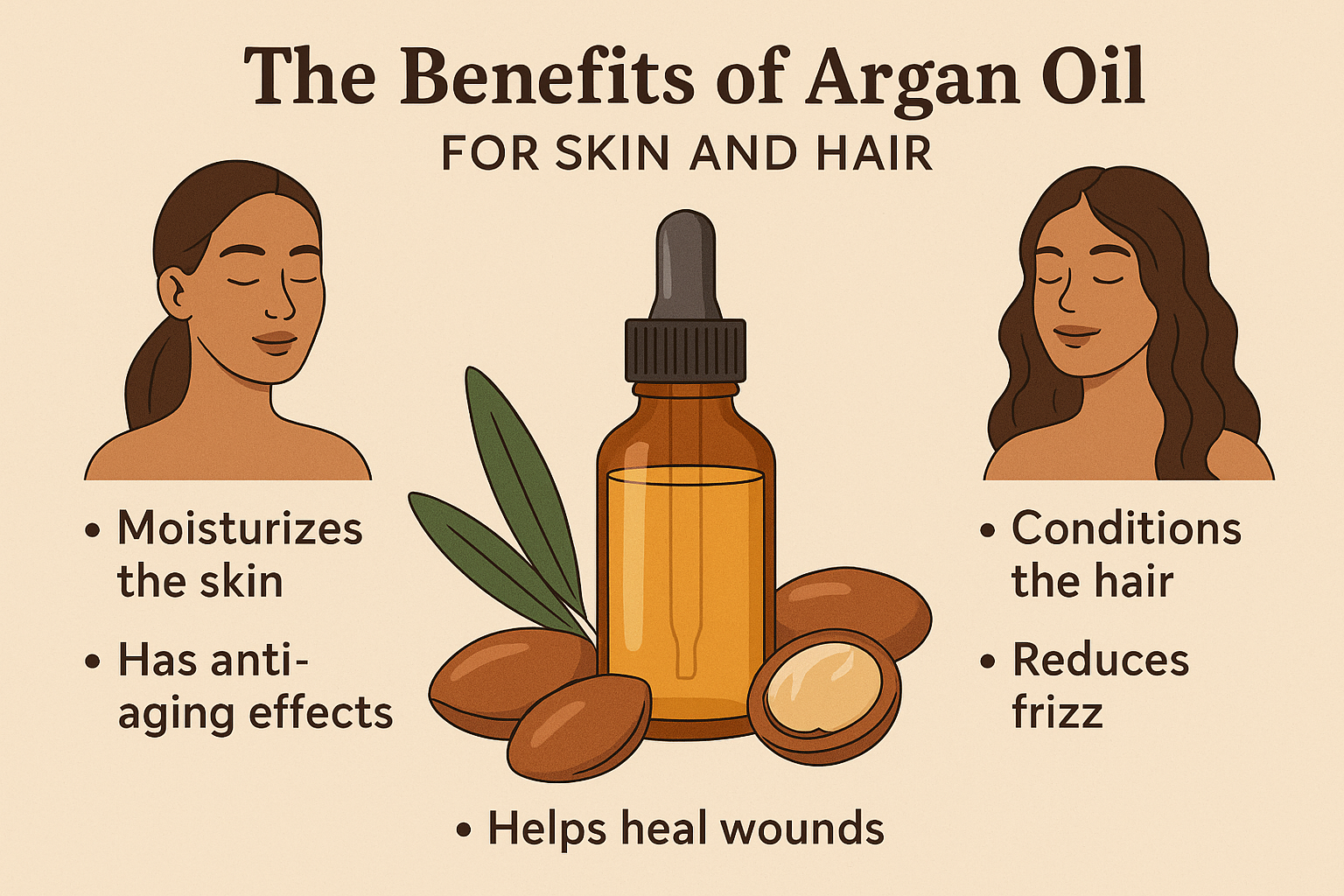
Argan oil holds a special place in Moroccan life. Families have used it for centuries as part of daily care, food, and wellness. People in Morocco often call it “liquid gold” because of its rich color, value, and many uses. This oil comes from the nuts of the argan tree, which grows only in the dry lands of southwestern Morocco.
Local women play a key role in argan oil production. Many work in small cooperatives where they hand-crack the hard argan nuts and gently press them to extract the oil. This slow process preserves the oil’s quality and keeps an old tradition alive. It also supports rural communities and helps women earn a steady income.
What Makes Argan Oil Special
Argan oil contains natural nutrients that support skin and hair health. Vitamin E helps protect the skin from dryness and early aging. Essential fatty acids, such as oleic acid and linoleic acid, help keep skin soft and flexible. Antioxidants support the skin barrier and protect against daily stress from sun, wind, and pollution.
The texture of argan oil feels light and smooth. Skin absorbs it quickly, so it doesn’t feel heavy or sticky. Hair also benefits from this light feel, since it adds shine without making hair flat or oily. Many people with dry, sensitive, or oily skin use argan oil with ease.
Pure, cold-pressed argan oil preserves these nutrients. Traditional extraction methods help preserve the oil’s natural balance, which makes it gentle and effective for daily use.
Benefits of Argan Oil for Skin
Argan oil supports skin hydration. A few drops help lock moisture into the skin, especially after cleansing. Damp skin absorbs oil more effectively, helping prevent dryness during the day.
Dry skin often feels tight or rough, especially in cold or dry weather. Argan oil helps soften the skin and restore comfort. Regular use supports smooth texture and a healthy glow.
Sensitive skin also benefits from argan oil. The oil calms the skin and reduces irritation. Many people use it on the face, neck, and hands without discomfort.
Argan oil works well for minimalist skincare routines. One product can replace both a serum and a moisturizer—the oil layers well with sunscreen or other skincare products.
Rough areas such as elbows, heels, and cuticles respond well to argan oil. Gentle massage improves softness and keeps skin flexible.
How to Use Argan Oil for Skin
Daily use feels easy and practical—clean skin first with a gentle cleanser. Place 2 or 3 drops of oil in the palm of your hand. Warm it slightly between the hands. Press the oil gently into the skin using light movements.
Night routines also benefit from argan oil. Skin repairs itself during sleep, and the oil supports this natural process. Morning routines stay simple since the oil absorbs fast and leaves no greasy layer.
Some people mix argan oil with a regular cream to add extra nourishment. Others prefer using it alone for a clean and simple routine.
Benefits of Argan Oil for Hair
Hair care traditions in Morocco include argan oil as a core element. Families apply it to protect hair from the sun, heat, and dryness. Hair stays strong and shiny with regular use.
Argan oil helps reduce scalp dryness. Healthy scalp care supports stronger hair growth and less breakage. The oil also smooths the hair cuticle, reducing frizz and improving shine.
Split ends often appear due to dryness and styling stress. Argan oil softens the ends and improves hair texture over time. Fine hair benefits from its light feel, while thick hair enjoys deep nourishment.
How to Use Argan Oil for Hair
Pre-wash Treatment offers deep care. Massage a small amount of oil into the scalp and the lengths of the hair. Leave it on for 20 to 30 minutes before washing. Hair feels softer and easier to manage after washing.
Daily use also works well. A few drops applied to damp hair help control frizz and protect hair during styling. Heat tools cause less damage when hair is lightly protected with oil.
Dry hair benefits from a finishing touch. Rub one drop between the palms and press gently into the ends. Hair looks smooth and healthy without feeling oily.
Many hair blends include argan oil with other natural botanicals. These blends support simple routines and daily care.
Argan Oil and Moroccan Culture
Argan oil represents more than beauty care in Morocco. Families keep a small bottle at home for many uses. Wellness practices include skin, hair, and body care with the oil.
Culinary argan oil also holds value. People drizzle it over bread, couscous, or salads. The nutty flavor adds richness to meals, while natural nutrients support overall health.
This connection between food, body, and care reflects Moroccan culture. Beauty feels linked to daily life rather than separate from it. Simple rituals hold deep meaning and support long-term well-being.
UNESCO recognizes the argan tree as part of Morocco’s cultural heritage. Protection efforts help preserve the land and the traditions associated with argan oil production.
Choosing Quality Argan Oil
Pure argan oil shows a light golden color and a mild nutty scent. Cold-pressed oil keeps its nutrients and natural balance. Additives and synthetic fragrance reduce quality and benefits.
Storage also matters. Dark glass bottles protect the oil from light and heat. Proper storage keeps the oil fresher for more prolonged use.
Small amounts go a long way. One bottle lasts several months with daily use.
Thoughts
Argan oil offers gentle care for skin and hair through simple routines. Natural nutrients support moisture, softness, and protection. The oil fits well into modern life while keeping strong ties to tradition.
Each drop carries a story of Moroccan land, women’s work, and cultural wisdom. Care rituals feel more meaningful with this connection to history and community.
Interest in Moroccan traditions continues to grow. Hammam rituals, herbal infusions, and natural oils offer quiet beauty and balance. Argan oil often serves as the first step into this rich world of care and tradition.