
Moroccan Hammam at Home: A Simple Guide to Self-Care Ritual
The Moroccan hammam holds a special place in daily life and culture. People have visited hammams for hundreds of years. These warm bathhouses offer more than clean skin. They give rest, peace, and a sense of renewal. Families and friends meet there. Stress leaves the body. The skin feels fresh and soft.
A traditional hammam may feel far away. Home life can still welcome the same ritual. A few simple steps and basic tools can recreate this calming experience. No special bathroom or spa skills are needed. Time, warmth, and care matter the most.
What Is a Moroccan Hammam?
A Moroccan hammam is a steam bath ritual. Heat, water, soap, and exfoliation work together. The process removes dirt and dead skin. Blood flow improves. Muscles relax. The mind slows down.
Hammams are found in many Moroccan cities, such as Marrakech, Fez, and Casablanca. Local people visit weekly. This habit stays strong today because it supports health and community life.
Why the Hammam Ritual Matters
The hammam connects body and mind. Warm steam opens pores. Black soap cleans deeply. Exfoliation refreshes the skin. Natural oils restore moisture. Each step supports balance.
Many people notice an improvement in skin texture after one session. Stress levels often drop as well. Regular hammam care supports healthy skin over time.
Preparing Your Home Space
A calm space helps the ritual feel complete. Choose a quiet time. Phones and noise should stay away. Warm water creates steam in the bathroom. Hot showers work well.
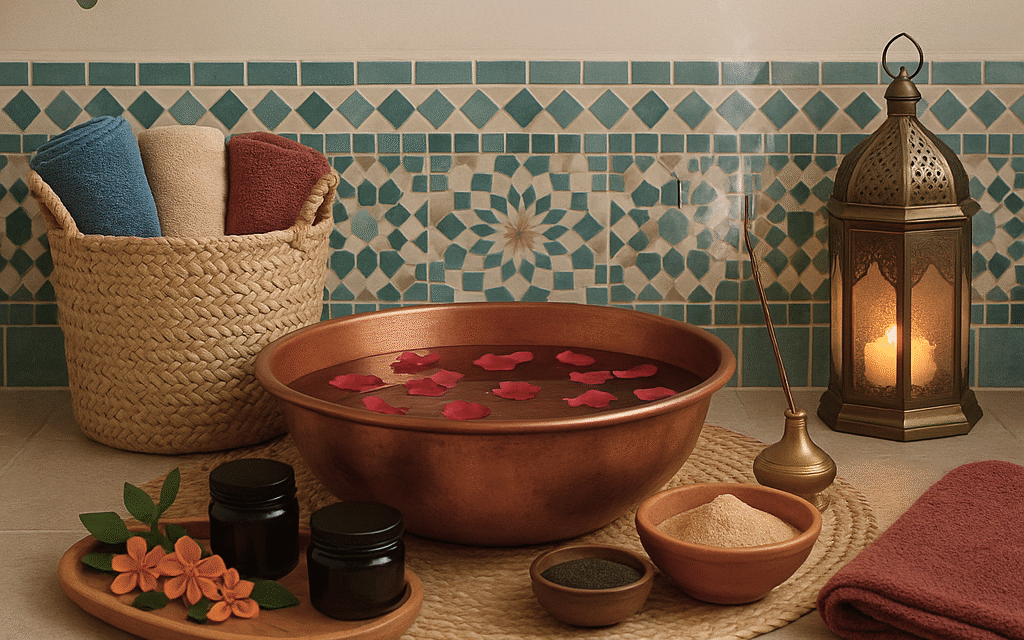
Soft light adds comfort. A candle or dim lamp can help. Rose water or natural scents feel soothing. Clean towels should be kept nearby. Comfort comes from simple details.
Warming and Softening the Skin
Heat prepares the skin for cleansing. Warm water relaxes muscles and opens pores. Five to ten minutes under warm water is enough.
Many people enjoy slow movements at this stage. Gentle breathing supports relaxation. A small bowl can help pour water over the body. This slow action creates focus and calm.
The Role of Moroccan Black Soap
Moroccan black soap is also called savon beldi. Olive oil paste forms the base. The texture feels smooth and soft. This soap cleans deeply without drying the skin.
Apply black soap to damp skin. Arms, legs, back, and feet all need coverage. A short rest allows the soap to work. Dead skin begins to loosen during this time.
Natural black soap is also suitable for sensitive skin. Many families in Morocco use it for all ages.
Exfoliation with a Kessa Glove
Exfoliation defines the hammam ritual. A kessa glove removes dead skin through gentle friction. Firm strokes work best. Circular or sweeping motions feel effective.
Small rolls of skin may appear. This result feels normal. Pressure should stay gentle to avoid irritation. Smooth and clean skin appears after rinsing.
Weekly exfoliation often works best. Sensitive skin may prefer longer gaps.
Rinsing and Skin Care
Warm water removes soap and loose skin. The body feels lighter after rinsing. Skin pores stay open for a short time.
Natural oils help seal moisture. Argan oil is a traditional choice. Many people call it liquid gold in Morocco. This oil absorbs quickly and supports skin softness.
Massage oil gently into the skin. Dry areas need extra care. Elbows, knees, and heels often benefit most.
A Moment of Rest After the Hammam
Rest completes the ritual. Moroccan hammams include a cooling period. People sit quietly, sipping mint tea. The body slowly returns to normal temperature.
Home rituals can follow the same idea. A robe or towel keeps warmth. Herbal tea or warm water feels comforting. Quiet moments help the body recover fully.
Tools Needed for a Home Hammam
A home hammam requires only a few items:
- Warm water and steam
- Moroccan black soap
- Kessa exfoliating glove
- Argan oil or natural body oil
- Clean towels or a robe
These tools support the whole experience. Quality matters more than quantity.
Skin Benefits Over Time
Regular hammam care improves skin texture. Removing dead skin enhances the absorption of oils and lotions. Blood circulation increases during heat and massage.
Many people notice smoother skin after the first session. Long-term care may reduce dryness and dullness. The ritual supports natural skin renewal.
Mental and Emotional Benefits
The hammam also supports mental health. Slow movements and warmth calm the nervous system. Focus shifts away from daily stress.
Quiet care builds self-respect. Many people feel grounded and refreshed after each session. This ritual creates personal time that modern life often lacks.
Cultural Roots of the Hammam
The hammam holds deep roots in Moroccan culture. Islamic traditions value cleanliness and ritual washing. Public bathhouses grew as community spaces.
Women often share stories in hammams. Elders pass knowledge to younger generations. These customs still exist today in many regions.
Bringing the hammam home keeps this tradition alive. Respect for history adds meaning to the ritual.
Tips for First-Time Practice
Beginners should move slowly. Heat and exfoliation feel intense at first. Gentle pressure works best. Short sessions allow the body to adjust.
Sensitive skin may need fewer exfoliation strokes. Natural products reduce irritation risk. Listening to the body matters most.
Making the Ritual a Habit
Weekly or biweekly sessions fit most routines. Consistency brings the best results. Skin and mind respond well to regular care.
Busy schedules can still allow short versions. Even a simple steam, soap, and oil routine offers benefits.
Final Thoughts on the Moroccan Hammam at Home
A Moroccan hammam at home offers more than clean skin. This ritual brings calm, care, and cultural connection. Simple tools and mindful steps create a powerful experience.
Time spent in self-care supports health and balance. Ancient traditions still serve modern life. The hammam proves that simple rituals can carry deep value.